
Made-to-Drawing Profile Tooling
Custom Rotary Broaches
Custom rotary broaches are manufactured to customer drawings for internal splines, serrations, multi-lobe forms, D and double-D profiles, octagons, special polygons and other non-standard geometries. Profile dimensions, cutting length, shank configuration, material and coating are reviewed for each Swiss-type lathe or CNC lathe application.
Special Form Capability
Custom Rotary Broach Profiles & Design Reference
Each special form rotary broach is evaluated against the required profile, broaching depth, workpiece material, holder setup and machine conditions.
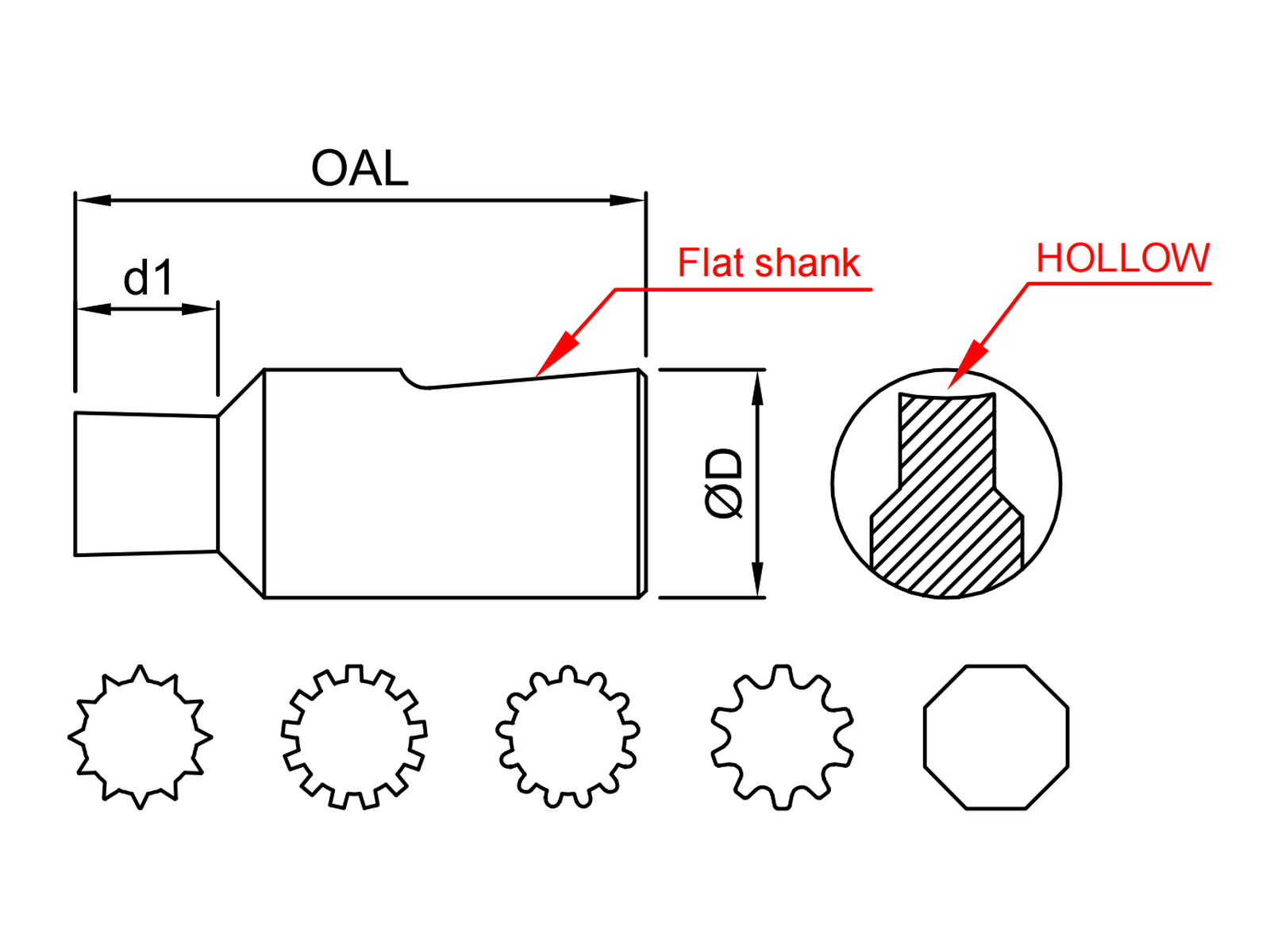
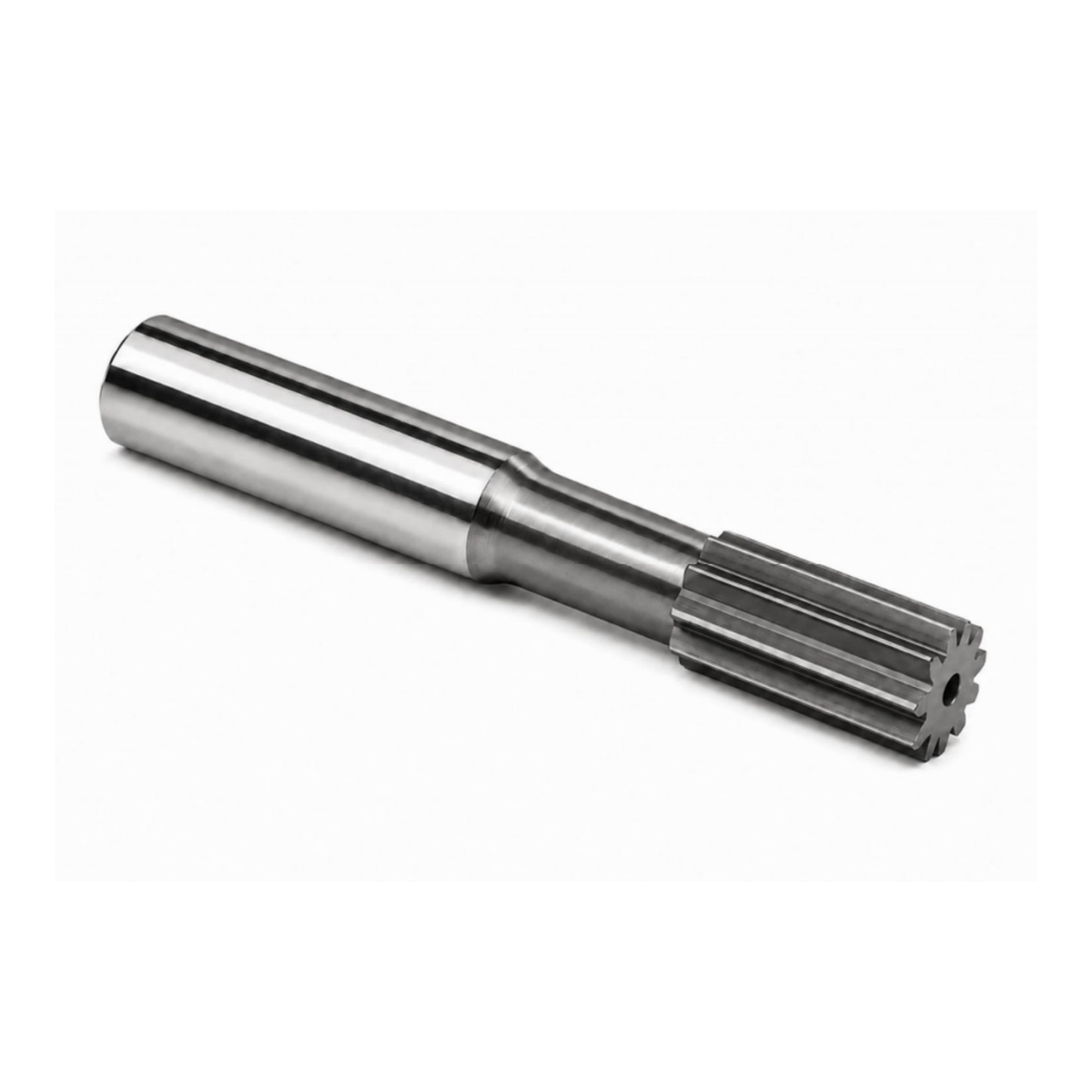
Common custom rotary broach forms include the profiles below. Other geometries can be reviewed from a part drawing or sample.
| Profile Type | Typical Forms | Important Quote Data |
|---|---|---|
| Spline | Straight-sided or drawing-defined internal spline | Tooth count, major/minor diameter, tooth form and depth |
| Serration | Fine or coarse internal serration profiles | Pitch, pressure angle, diameters, tooth count and tolerance |
| Multi-Lobe | Custom lobe count and non-standard star forms | Major/minor dimensions, radii, lobe count and orientation |
| D / Double-D | Single-flat and double-flat drive profiles | Diameter, flat dimensions, corner radii and broaching depth |
| Polygon | Octagonal, double hex, double square, triangle and rectangle | Across-flat dimensions, corner form, tolerance and depth |
| Special Profile | Keyway, missing-tooth, asymmetric and customer-specific forms | Complete drawing, material, quantity and machining conditions |
Engineering note: Not every deep, narrow or asymmetric profile is suitable for rotary broaching. We review cutting load, chip space, pilot-hole preparation and holder clearance before confirming the tool design. Punch broaching or another process may be recommended when it is technically more suitable.
Material & Tool Design
Custom Broach Material, Coating & Shank Options
ASP23 Powder-Metallurgy HSS
ASP23 provides a fine, uniform structure with a practical balance of wear resistance, compressive strength and toughness. It is well suited to special form rotary broaches whose cutting edges experience repeated loading.
Learn more about ASP23 →TiN PVD
Quote Preparation
Information Required for a Custom Rotary Broach
A complete drawing and machining information allow us to evaluate feasibility, define the broach geometry and quote the correct special form tool.
Profile Drawing
Send a dimensioned drawing showing the complete internal form, radii and orientation.
Critical Dimensions
Identify the profile dimensions, tolerances and inspection requirements that are critical.
Broaching Depth
Provide the finished profile depth and whether the prepared hole is blind or through.
Workpiece Material
Include the material grade, heat-treatment condition and hardness when available.
Machine & Holder
Tell us the machine model, rotary broaching holder and available shank capacity.
Quantity & Production
Provide the trial quantity, expected annual demand and target workpiece volume.
Technical Questions
Custom Rotary Broach FAQ
Which custom profiles can be rotary broached?
Splines, serrations, multi-lobe profiles, D and double-D forms, special polygons, keyways and many drawing-defined forms can be evaluated. Final feasibility depends on size, depth, material and tool access.
Is a drawing required for quotation?
Yes. A dimensioned drawing is the best basis for confirming the custom profile, tolerance, cutting length, shank configuration and inspection method.
Can small trial quantities be supplied?
Custom tools can be evaluated for prototype or trial quantities. Please provide the expected quantity together with the drawing so manufacturing requirements can be reviewed.
Can custom broaches be used on Swiss-type lathes?
Yes, when the profile, broaching depth, prepared hole, holder clearance and machine setup are suitable. The machine and holder information should be supplied during technical review.
Related Resources
Rotary Broaching Information
Need a Custom Rotary Broach?
Send us the profile drawing, critical dimensions, tolerance, broaching depth, workpiece material, machine model and required quantity for technical evaluation.